Data engineering services
Reliable decisions depend on information people can trust. We connect systems and reshape data so it can support operations, reporting and AI.
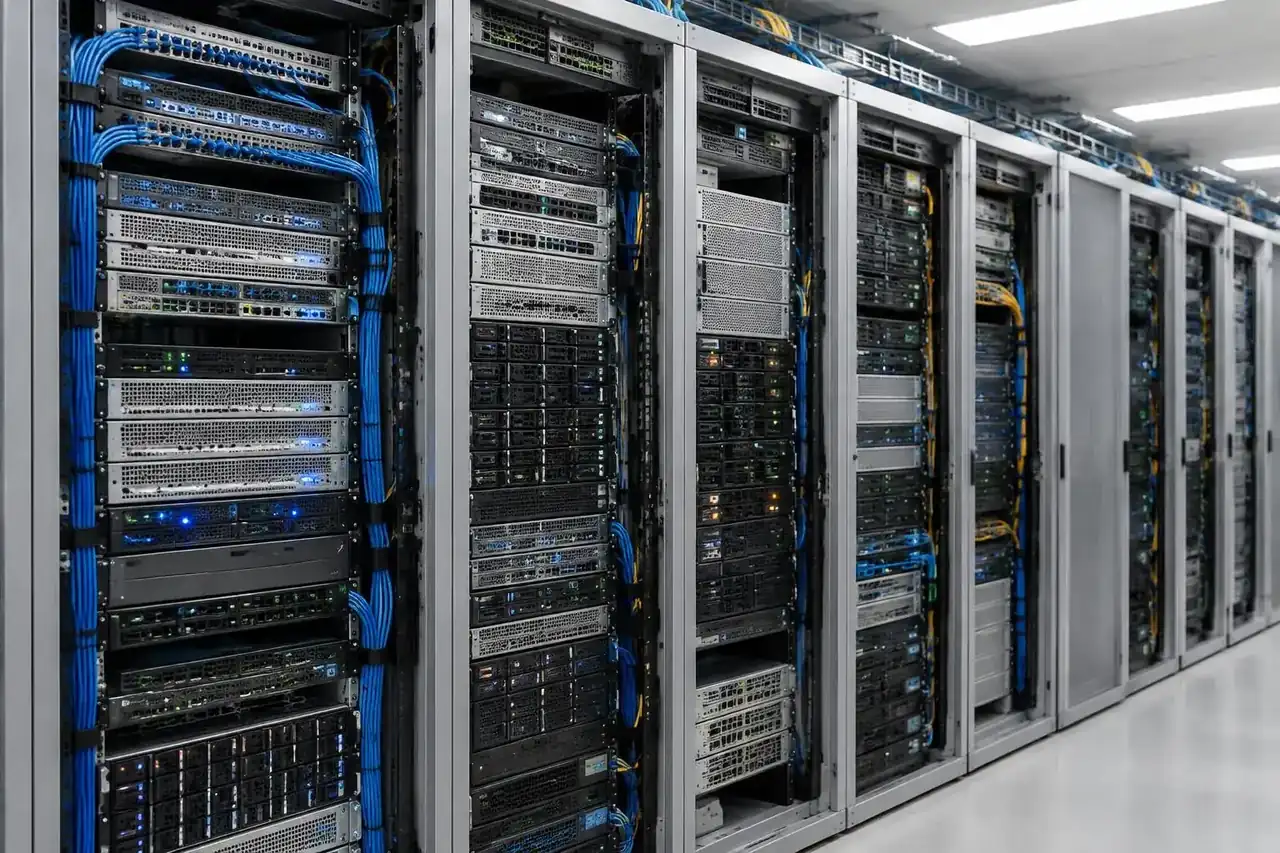
Illustrative image · not client premises
A practical delivery view
Connect the sources
Start with where data comes from, who owns it and how often the business needs it. The integration plan follows those realities.
- Source and access review
- ETL and data transformation
- Cross-system consolidation
Improve the flow
Data pipelines make information usable across teams. The work includes transformation, validation and the relationships between source systems.
- Pipeline design and implementation
- Source-to-output validation
- Operational and reporting data
Move without losing the work
Legacy migration requires careful mapping and validation. An insurance engagement moved petabyte-scale databases with zero production downtime in four months; that is a specific outcome, not a general guarantee.
- Legacy mapping and migration
- Validation and reconciliation
- Production continuity planning
The problems that bring teams to us
Data problems rarely announce themselves as data problems. They show up as two reports that disagree, a month-end that depends on one person’s spreadsheet, or an AI pilot that cannot find the history it needs. Underneath, the causes repeat: systems that were never connected, manual exports between them, and legacy databases nobody wants to touch. Data engineering fixes the plumbing so that the numbers arrive on time and mean the same thing everywhere.
- Reports that do not agree
- Manual exports and spreadsheets
- Ageing databases that are risky to change
- AI projects blocked by missing data
Delivered work at scale
For a leading insurance group, we moved databases dating from 2003 to a modern, scalable ETL pipeline and architecture, at petabyte scale. For an international payment gateway, we built the backend data system for high-frequency data across countries, plus a data collection pipeline for disputes. For a global manufacturing enterprise, we automated inventory, finance and data consolidation across countries, working with SAP, Salesforce and reporting tools. The results below belong to those engagements.
- Insurance: complete transfer with zero production downtime
- Payments: disputes handled when raised, not at the 90-day deadline
- Manufacturing: cross-country parts availability from 15 days to 2
Start with one data flow
Pick one report, feed or migration that causes trouble and walk us through it on a short call: where the data starts, who touches it, how often it is needed and where it breaks. That is usually enough to say whether you need a pipeline, a migration or a smaller fix. If you are unsure where data sits in your wider AI plans, the free AI readiness report is a useful first step.
- One flow, from source to output
- Owners, frequency and failure points
- Free AI readiness report as an alternative
Technology in the work
 Python
 SAP
 Salesforce
Technology references, not partnership or certification claims. Fit and access are reviewed for each engagement.
Questions that come up
What is an ETL pipeline?
ETL stands for extract, transform, load. A pipeline pulls data from source systems, cleans and reshapes it, and loads it where it is needed, such as a warehouse or a reporting tool. It runs on a schedule or continuously, without manual exports.
Can you migrate a legacy database without stopping our operations?
That is the aim, and it has to be planned for. In one engagement for a leading insurance group, the complete transfer finished with zero production downtime. That result belongs to that project. Your systems, volumes and constraints decide what is realistic.
Which tools and platforms do you use?
Python is our main language for data work, with JavaScript and C# where needed. Other tools are chosen for each project, based on what you already run and who will maintain it. Delivered work has integrated with SAP and Salesforce.
Do we need data engineering before starting AI?
Often, yes. An AI system is only as useful as the data it can reach. If the history is incomplete or locked in separate systems, fixing that comes first. A short review will tell you how much groundwork your first AI project needs.
Keep exploring

Let’s talk about your next step.
The workflow, the data and what needs to change.